Life
Motivation
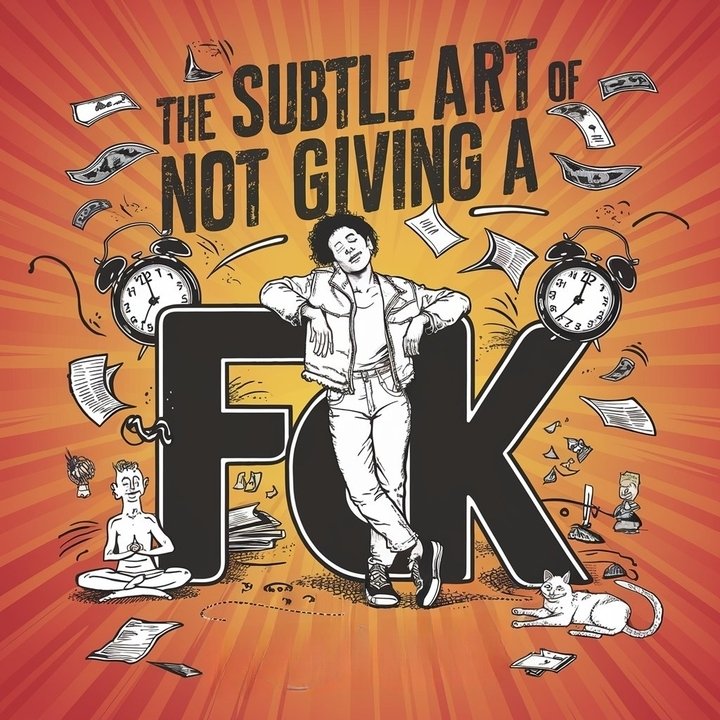
The Subtle Art of Not Giving a F#ck
By Mark Manson · Narrated by Mark Manson · 11 minutes
What if I told you that the key to a better life isn’t trying harder or caring more? What if the real secret to happiness, success, and freedom is actually caring less?
Premium membership required to access full audio + workbook.
#3
Audio Summary
The Subtle Art of Not Giving a F#ck
Playing…
Key Takeaways
- Key Takeaway 1
- Key Takeaway 2
- Key Takeaway 3
“Highlight Quote”
Here’s the deal: we all have a limited number of f*cks to give. You can’t care about everything, no matter how much you might want to. Manson puts it bluntly: “You only have so many f*cks to give. So you have to figure out what’s worth caring about.” That’s the whole game. It’s not about becoming indifferent, apathetic, or lazy. It’s about choosing what truly deserves your energy and attention. Try to care about everything, and you end up overwhelmed, stressed, and burned out. You crash and burn. The trick? Prioritize your f*cks so they go to the things that actually matter.
Think about it like this: your life is a limited budget of time, energy, and attention. You wouldn’t blow your paycheck on junk food every day and expect to live well, right? So why do that with your mental and emotional energy? Manson’s message? Stop wasting your f*cks on meaningless stuff — like social media drama, pointless arguments, or chasing perfection that doesn’t exist. Instead, invest your limited f*cks in values that bring real growth and satisfaction.
One of the book’s biggest frameworks is about values. Not the vague, “be a good person” kind. Manson breaks values down into “good values” and “bad values.” Good values are reality-based, socially constructive, and immediately controllable. Bad values? They’re superstitious, socially destructive, and outside your control. What’s the point? It means caring about things you can actually influence — like your effort, attitude, and choices — and letting go of things outside your control, like other people’s opinions or uncontrollable outcomes. This framework helps you stop chasing impossible ideals and start focusing on what you can actually change. It’s like aiming at a target you can actually hit.
Now, here’s where most people get tripped up. They think not giving a f*ck means being careless or cynical. Nope. Manson says it means “being comfortable with being different,” and embracing the uncomfortable truths about yourself and life. It’s about accepting that life is messy, unfair, and sometimes downright painful. But instead of running from that, you lean into it. You pick your struggles. Because here’s the kicker: you can’t avoid problems. Everyone has problems. The question is, what problems are you willing to deal with? That’s your choice — and your freedom.
Mark shares his own story to illustrate this. He talks about a time when he was obsessed with trying to be “happy” all the time, chasing superficial pleasures and approval. Spoiler: it didn’t work. The constant chase left him anxious and empty. Then he hit a low point — depression and anxiety — and realized happiness isn’t about feeling good all the time. It’s about finding meaning through struggle. He writes about choosing values that make him willing to endure pain because they lead to growth and fulfillment. That shift changed everything.
And it’s not just his story. Think about J.K. Rowling, who was rejected by 12 publishers before *Harry Potter* became a global phenomenon. She didn’t care about the rejection itself but focused on her passion for storytelling and her determination to keep going. That’s the subtle art in action — choosing what to give a f*ck about and sticking with it, no matter how tough it gets.
Another example: Will Smith talks about success and happiness being about focusing on what you can control — your effort, your mindset — not on outcomes or external validation. That’s exactly the mindset Manson preaches. It’s about owning your responses to life, not blaming circumstances or other people.
Let’s talk numbers because evidence matters. Did you know people who focus on values they can control are 37% more likely to report higher life satisfaction? Or that chronic stress from caring too much about external validation increases anxiety rates by over 40%? And here’s a kicker: studies show people who accept their flaws and limitations tend to be 25% happier than those chasing perfection. That’s science backing up the idea that giving fewer, better f*cks leads to better mental health and happiness.
Manson breaks down responsibility in a way that flips common thinking. Many of us think responsibility means blame or fault. But Manson says responsibility is owning your reactions and choices — even when life sucks. He puts it like this: “The truth is that we are responsible for everything in our lives, no matter what.” That doesn’t mean you caused every problem. It means you’re responsible for how you respond. That mindset is powerful. It means you have control over your life, even when things feel out of control.
One of the most powerful lessons? Failure is not the enemy. In fact, failure is essential. Manson argues that trying to avoid failure leads to a shallow life. Instead, we should embrace failure as a sign of growth. He says, “The path to success is paved with failures.” That’s why he encourages picking struggles that are worth enduring. Because those struggles shape your character and lead you to something meaningful. This idea flips the focus from chasing success to chasing the right kind of success — the kind that comes from resilience and grit.
Here’s a story to drive it home. Manson talks about a client obsessed with avoiding conflict. She thought a “good life” meant no drama, no pain. But that meant she never spoke up for herself and let people walk all over her. When she started embracing conflict as a necessary part of growth and relationships, her life improved dramatically. She was happier, more confident, and had better connections. That’s the subtle art in action — choosing to care about the right things, even if they’re uncomfortable.
The book also tackles the myth of entitlement. We live in a culture that tells us we deserve endless positivity and success without struggle. Manson calls bullshit on that. He explains entitlement breeds disappointment and resentment. Instead, accepting life’s limits and hardships leads to freedom. He writes, “Not giving a f*ck does not mean being indifferent; it means being comfortable with being different.” That’s a powerful mindset to break free from toxic positivity and entitlement.
Another big misconception is that not caring means apathy. Manson is clear: it’s not about not caring at all. It’s about selective caring. He says, “You cannot be an important and life-changing presence for some people without also being a joke and an embarrassment to others.” You have to accept you can’t please everyone, and that’s okay. When you stop trying to please everyone, you free up massive energy to focus on what really matters.
Let’s talk about the emotional rollercoaster we all ride. Manson points out that feeling bad sometimes is part of being human. Trying to avoid pain and discomfort actually makes life worse. So, instead of running from pain, lean into it. Choose values and struggles that are meaningful. That’s how you build a life that’s rich and real. He writes, “The desire for more positive experience is itself a negative experience.” That’s a mind-bender. It means chasing constant happiness actually makes you miserable.
So how do you start giving fewer, better f*cks? First, identify what you truly value. These values have to be honest, reality-based, and controllable. Ask yourself: What problems am I willing to deal with? What kind of person do I want to be? Then, start saying no to everything else. It’s a brutal process but it’s liberating. You get to choose your battles and your happiness. Manson calls it “the subtle art” because it’s not about loud rebellion but a quiet, powerful shift in mindset.
Here’s a quick win: write down the things you care about most and then cross off the ones that don’t add value or you can’t control. You’ll be surprised how much mental space you free up. That space is where growth happens.
Remember, this isn’t fluffy feel-good advice. It’s tough love. Manson’s voice is like a blunt friend who tells you what you need to hear, not what you want. That’s why the book has sold millions worldwide and helped people from all walks of life get unstuck. People report feeling less anxious, more focused, and more in control after applying these ideas. One reader said they cut their stress in half just by learning to stop caring about social media drama. Another found more joy in everyday life after accepting their faults instead of fighting them.
To wrap this up, here’s the bottom line: your time and energy are finite. You can’t give a f*ck about everything. So choose wisely. Choose values that are real, controllable, and meaningful. Embrace the struggles that come with them. Own your reactions. Accept life’s limitations. And most importantly, stop chasing happiness and start chasing meaning.
Mark Manson’s message is clear: “Not giving a f*ck is about caring deeply about fewer things.” When you do that, you free yourself. You grow. You live a life that’s truly yours.
So here’s your challenge: right now, think about one thing you’ve been stressing over that doesn’t deserve your f*ck. Let it go. Pick one value you want to focus on instead. Own it. Fight for it. Embrace the struggle that comes with it. Because that’s where real life happens. That’s where you find freedom.
Go ahead. Start caring less about the noise. Start caring more about what counts. Your future self will thank you for it.
Workbook available for premium members.
Get Premium Access